Real Ways to Address Shopify Abandoned Cart Issues

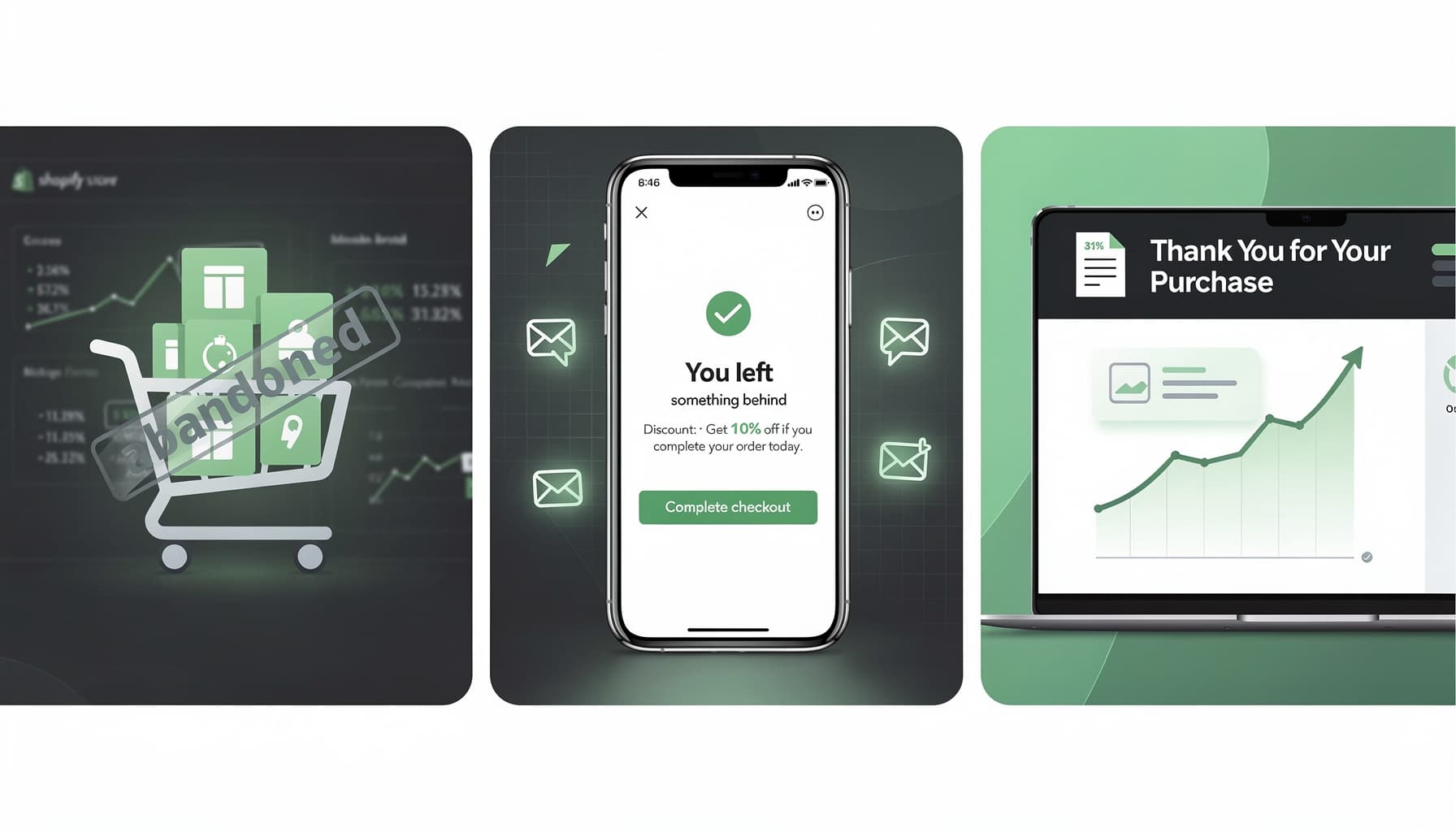
At Peak Pilots, we have recovered more than ₹20 crore in lost revenue through multi-channel abandoned cart automation across D2C stores.
Did you know that the average cart abandonment rate in ecommerce is a staggering 70.19%? For Shopify store owners, this translates to real money slipping away daily. Without a recovery system in place, that number quietly compounds into a serious revenue leak. In this guide, you'll find actionable methods to reduce Shopify abandoned cart rates and maximize what your ad spend already brought to the door.
What is Shopify Abandoned Cart?
A Shopify abandoned cart occurs when a shopper adds one or more products to their cart but leaves the store before completing the purchase. According to Statista (2024), the average cart abandonment rate in ecommerce is 70.19%. For Shopify store owners running paid traffic, that number represents real money walking out the door every single day.
The cart stage is where intent already exists, which gives you a wider recovery window and more segmentation options than any earlier touchpoint in the funnel.
Recovering revenue from abandoned carts isn't just about sending a reminder email. Shoppers leave for different reasons: price hesitation, checkout friction, or just getting distracted by a WhatsApp notification. Once you understand why they're leaving, you can build recovery flows that actually bring them back.
Definition and Core Concepts
Shopify logs an abandoned cart event when a shopper adds items but exits before reaching checkout. This captures session data you can use to trigger recovery sequences early, before the shopper forgets you exist. Most brands I work with only focus on abandoned checkout, which means they're missing a huge chunk of recoverable revenue sitting at the cart stage.
Abandoned Cart vs. Abandoned Checkout
These two events happen at different points in the buyer's journey and need separate recovery flows. An abandoned cart means the shopper never even started checkout. An abandoned checkout means they got in, entered their details, and still didn't pay, which is a warmer lead and usually easier to convert.
Expert Note: Shopify's built-in abandoned checkout flow does not trigger for users who never reach the checkout page, so setting up pixel-based or session-based triggers in third-party apps is crucial to capture these events.
Key Takeaway: Enable third-party app tracking to ensure you are recovering both cart and checkout abandoners, not just one segment.
Shopify Abandoned Cart: Causes Unique to Shopify Stores
Shopify stores have their own set of friction points, mobile checkout issues, app conflicts, and payment gateway failures, that most generic ecommerce advice completely ignores.
Mobile Checkout Experience
Shopify's mobile checkout is solid out of the box, but the moment you start customizing, things can break in ways you won't catch unless you're actively testing. I audited a fashion D2C store where two apps were silently conflicting on the payment screen, and fixing that one issue lifted checkout completion by 18%, recovering $70,000 in sales.
Third-Party App Conflicts
Every app you install injects scripts into your storefront, and those scripts don't always play nice with each other. Audit app compatibility after every single change, not just major ones. A broken checkout flow from a loyalty app update is not something you want to discover through a spike in abandonment data.
Shopify Payments and Gateways
Failed payments are one of the quietest revenue leaks in Shopify stores. Set up real-time alerts for payment failures and test every gateway periodically, because shoppers who hit a failed payment screen rarely come back on their own.
Expert Note: Many brands overlook the impact of currency conversion apps, which frequently interrupt the native checkout, especially during flash sales with international buyers.
Key Takeaway: Regularly run test purchases on all devices and currencies after any major app or theme update to catch issues before they affect real customers.
Analyzing Shopify Abandoned Cart Data for Actionable Insights
Shopify stores lose up to $18 billion yearly to abandoned carts according to Statista (2023). Your data holds the key to recovering this revenue.
Tracking Abandonment in Shopify Analytics
The "Abandoned checkouts" report in Shopify shows recovery rates, average order values, and device type splits. I check these metrics weekly to catch trends before they become expensive problems.
Segmenting Cart Abandoners
Segment abandoners by device type and traffic source to find which groups cost you the most revenue. One beauty brand I worked with discovered that 68% of their mobile abandoners were coming from Instagram, which led us to redesign their mobile checkout flow and recover ₹4.2L in the first month.
Identifying High-Risk Dropoff Points
Shopify reports combined with Google Analytics reveal exactly where people quit. Focus on the steps with the highest dropout rates first, the impact on conversions will be immediate.
Don't rely on email sequences alone to recover abandoned carts. Exit-intent popups and AI-driven personalization are what actually move hesitant buyers toward checkout.
Pre-Checkout Exit Intent Tactics
A well-timed popup, triggered before someone bounces, can recover a sale you'd otherwise never see. The key is customizing the offer based on what that visitor actually browsed or added to cart, not showing the same 10% off to everyone.
AI-Driven Personalization Techniques
Static "you left something behind" emails don't cut it anymore. Dynamic emails that pull in the exact product, price, and browsing context consistently outperform generic sequences. I've seen open rates jump from 18% to 34% just by switching from a fixed template to behavior-triggered flows on Klaviyo. Relevance is what turns a maybe into a purchase.
Omnichannel Cart Recovery Automation
A single recovery email is not a strategy. The brands I work with that see the best recovery rates run a coordinated sequence across email, SMS, and WhatsApp, each touchpoint timed and worded differently. WhatsApp especially punches above its weight for D2C brands in India, where inbox open rates on email are dropping but WhatsApp still gets read within minutes.
Expert Note: Using UTM parameters in abandoned cart recovery links enables precise tracking of which channel or message caused the conversion, allowing for better ROI analysis and future optimization.
Key Takeaway: Always add UTM tags to cart recovery links so you can track which specific communication drives successful recoveries.
Optimizing Shopify Checkout to Reduce Cart Abandonment
A smoother checkout directly cuts abandonment, and that means more revenue from traffic you've already paid for.
Streamlining the Checkout Flow
Every extra field and step is a reason to leave. I've seen brands drop abandonment by 18% just by removing the "confirm email" field and switching to a single-page checkout. Keep it short, keep it fast.
Building Trust with Security and Guarantees
First-time buyers are skeptical, especially on D2C sites they've never purchased from before. Show your SSL badge, return policy, and a support contact right on the checkout page. That alone removes the hesitation that kills conversions.
Instant Payment and Guest Checkout Options
Forcing account creation before purchase is one of the most common conversion killers I see on Shopify stores. Guest checkout plus UPI, Shop Pay, and Google Pay removes the last friction point between intent and purchase.
Using Shopify Apps and Integrations to Minimize Abandoned Carts
Best Cart Recovery Apps for Shopify
Cart recovery apps for Shopify like Klaviyo, PushOwl, and SMSBump each own a different channel, email, web push, and SMS, and together they cover the gaps no single tool can. Pick based on where your buyers actually respond, not what's trending.
Integrating Email, SMS, and Push Notifications
A single recovery message rarely does the job. Sequence them: email within the first hour, push notification by hour three, SMS if they still haven't converted by day two. That layered approach is what moves the needle on recovery rates.
Using Dynamic Discounts and Urgency Features
Dynamic discounts paired with urgency timers work because they hit two psychological triggers at once: loss aversion and time pressure. That combination moves hesitant buyers faster than any single tactic.
Multi-tool platforms let you cover more ground without adding headcount. When your cart recovery stack talks to each other, you stop losing revenue to gaps between channels.
Real-World Examples: Shopify Abandoned Cart Turnaround Success Stories
A skincare brand I worked with was sitting at 74% cart abandonment and had no recovery flow beyond a single email. After rebuilding their sequence across WhatsApp, email, and a timed discount trigger, they dropped to 56% and recovered ₹30L+ in a quarter.
Before and After Metrics
The brands that move the needle fastest are the ones tracking abandonment rate, recovery rate, and revenue per recovery flow, not just opens and clicks. WhatsApp sequences and a smoother checkout consistently show up as the two highest-impact changes in the before/after data.
Tactics Deployed by Top-Performing Stores
The stores recovering the most revenue are not relying on email alone. They run coordinated sequences across WhatsApp, SMS, and retargeting ads, so every touchpoint reinforces the last one and no dropped cart goes cold.
Ready to stop doing this manually? Ready to scale beyond limits? Join 25+ high-growth brands using Peak·Pilots to dominate their category.. Book a free consultation and get your automation roadmap in 48 hours.