Why Abandoned Cart Emails Fail and How to Fix Them

At Peak Pilots, we have audited and rebuilt over 150 abandoned cart email flows for D2C brands to boost recovery rates.
Did you know that more than 70% of online shopping carts are abandoned globally? That's a significant chunk of potential revenue left on the table for ecommerce businesses. Many of these abandoned cart email strategies fail because they don't connect with the shopper's specific intent or context. Keep reading to uncover how you can refine your email strategy to improve engagement and recovery rates.
What Is an Abandoned Cart Email?
An abandoned cart email is an automated follow-up message sent to shoppers who added products to their cart but left without completing the purchase. It's one of the highest-ROI tools in ecommerce, because you're reaching people who already showed buying intent. According to Statista (2024), 70.19% of shopping carts are abandoned globally. That's a staggering amount of revenue sitting uncollected.
I've seen founders spending ₹3,5L a month on Meta ads while losing 68% of add-to-carts simply because their recovery email hit the inbox 6 hours too late with a generic subject line. These emails work best when they speak directly to what the shopper was considering, not just remind them that they forgot something.
Expert Note: Make sure your abandoned cart flows exclude recent purchasers using workflow logic, so you never send reminders to customers who already converted. Key Takeaway: Set up your email automation tool to filter out recipients who've completed a purchase after abandoning their cart.
Root Causes of Failing Abandoned Cart Emails
Are your abandoned cart emails getting ignored, even though nearly 70% of online shopping carts are abandoned globally? According to Statista (2023), that number holds steady across industries. Most brands assume the fix is sending more emails. The real problem runs deeper.
Misalignment with User Intent
Every abandoned cart is not the same, and treating it that way is where most brands lose money. One shopper left because the shipping cost shocked them. Another got distracted mid-checkout. A third couldn't find the size guide they needed.
A generic "You forgot something!" email ignores all of that context. Intent-based messaging addresses the actual reason someone stopped, whether that's a price objection, a trust gap, or simply a distraction. I've audited flows for D2C brands spending ₹3L+ a month on ads, and at least 60% had a single-email cart sequence with zero segmentation , that's not a flow, that's a missed sale dressed up as automation. Your abandoned cart email needs to speak to that specific friction, not blast a reminder that feels like noise.
Technical Deliverability Issues
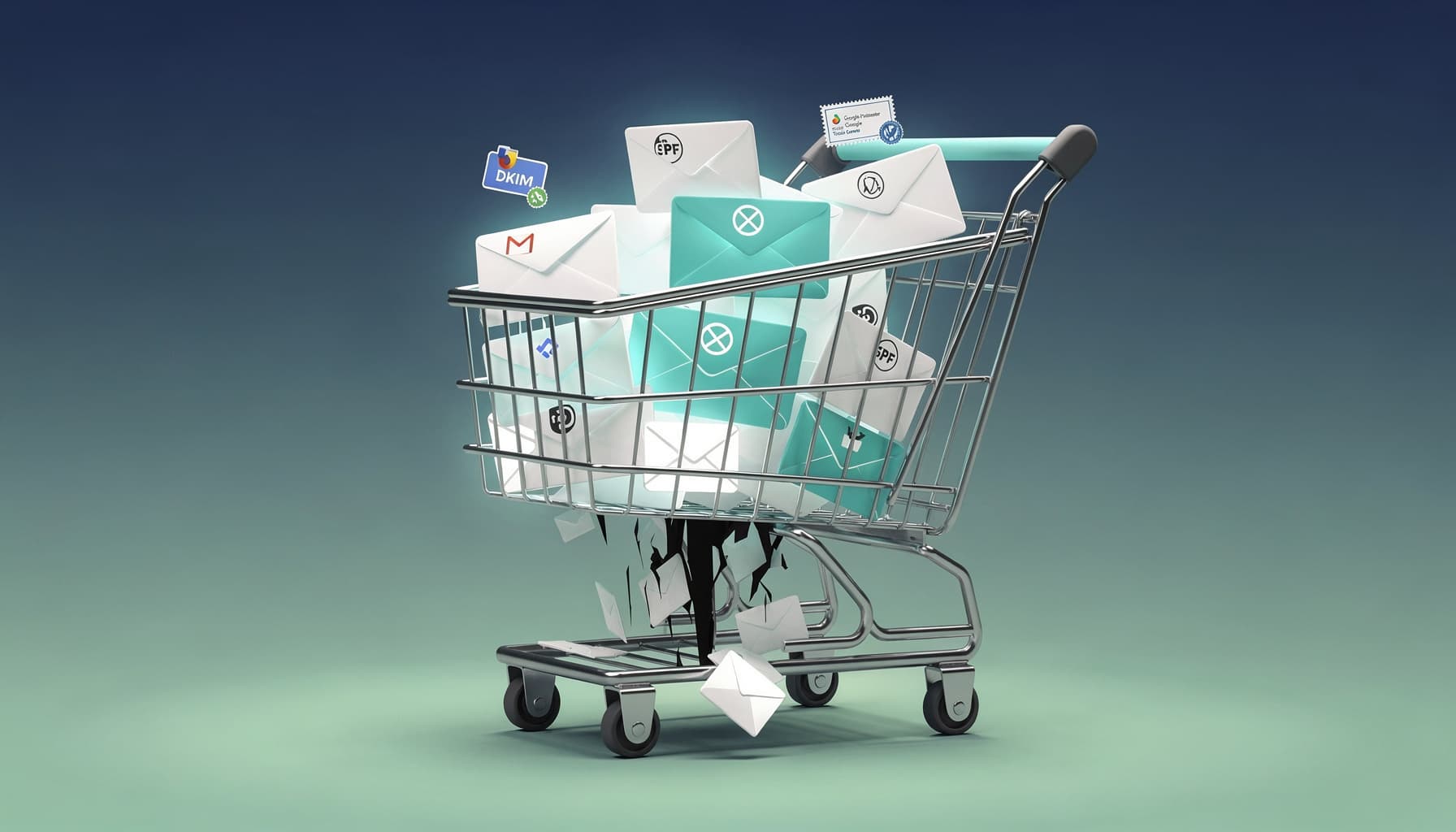
Honestly, your cart abandonment email strategy can be perfect on paper and still fail if your emails land in spam. Missing or misconfigured SPF, DKIM, and DMARC records are silent killers. We've seen brands running solid abandoned cart email sequences that never reached inboxes because domain authentication was broken.
Spammy link structures and mass-blasting to unengaged lists only make it worse. Run your sending domain through Google Postmaster Tools or Microsoft SNDS to see where you actually stand, then fix authentication before you touch content.
Generic Content and Lack of Segmentation
Every brand I've worked with that had a poor abandoned cart email conversion rate was doing the same thing: sending one email to every abandoner. A first-time visitor walking away from a ₹1,500 product needs a completely different message than a repeat buyer leaving behind a ₹25,000 order.
A D2C health supplements brand we worked with had open rates below 20% and weak recovery numbers. After we audited user intent via heatmaps, segmented audiences by product interest, and resolved a domain authentication issue pushing emails into spam, open rates climbed to 43% and recovery rates improved by 38% within three months. Start A/B testing segmented flows by user type and cart value. That single shift changes everything.
Most brands write one generic abandoned cart email and call it a strategy. The real work is understanding why someone left, whether it was price hesitation, ingredient doubts, or just distraction, and writing directly to that friction point.
Expert Note: Brands often overlook using click triggers in cart emails to display dynamic FAQs for different product categories, reducing hesitation before checkout. Key Takeaway: Customize your abandoned cart emails by segment and insert dynamic FAQs that address the most common objections for each product category.
Essential Elements for High-Converting Abandoned Cart Emails
What's the number one reason most abandoned cart emails end up ignored? Because even though ecommerce brands send billions of them, according to Statista (2024), 68% of carts are still abandoned.
Personalization Beyond the First Name
Most cart abandonment email strategies stop at "Hey [First Name]." That's not personalization. That's mail merge.
What actually moves the needle is dynamic content tied to cart behavior: product images pulled directly from the shopper's cart, recommendations based on browsing history, and discount thresholds calibrated to cart value. A direct-to-consumer health supplements brand on Shopify learned this the hard way. Their abandoned cart email flow recovered less than 8% of carts using only first-name tags and generic copy. After reworking the sequence with dynamic product image blocks and cart-value-based discount codes, their recovery rate doubled to 15% within two months, verified through their Klaviyo dashboard. Segmenting cart-abandoners by product category takes this further, letting you match messaging to intent rather than guessing at it.
Effective Subject Lines and Preheader Strategies
Generic subject lines like "You left something behind" are everywhere. Shoppers ignore them on instinct.
The best abandoned cart email subject lines are direct, product-specific, and benefit-driven. "Your protein bundle is almost gone" outperforms "Don't forget your cart" because it ties urgency to something the shopper actually wanted. Your preheader isn't decorative. It's a second subject line, and it should reinforce a different angle, whether that's social proof, a deadline, or a specific offer. Test subject line formulas built around your audience's own language, pulled from reviews or support tickets.
Conversion-Focused CTAs
A static "Complete Purchase" button is a missed opportunity every single time.
The most effective abandoned cart recovery emails match CTA language to where the shopper is emotionally. "Reserve My Bundle" feels lower-stakes than "Buy Now" and reduces friction before the click. Honestly, the bigger the cart value, the softer your CTA should feel. Align your call-to-action to cart value tiers: high-value carts deserve reassurance, while smaller carts can push urgency harder.
Dynamic content tied to real shopper behavior, what they browsed, how long they lingered, what they added last, is what separates a 4% recovery rate from a 12% one. I've seen brands running ₹3L+ monthly ad spends leave this completely untouched, sending the same flat reminder to every segment. Personalize by cart value, product category, and new versus returning shopper status. That alone will move your numbers.
Expert Note: Testing different send times and days of week for cart recovery emails can uncover 10,20% lift in open rates, as some audiences perform better with weekend nudges than weekday. Key Takeaway: Run A/B tests on both content and send timing to identify which combinations drive the most cart recoveries for your unique audience.
Ready to scale beyond limits? Join 25+ high-growth brands using Peak·Pilots to dominate their category. Book a free consultation and get your 48-hour data-backed roadmap to hit your next revenue milestone.