How Small Brands Thrive with eCommerce Strategy

At Peak Pilots, we've designed and executed data-driven ecommerce brand strategies for more than 25 high-growth D2C brands across 15+ categories.
A bold strategy fuels growth for small brands. Many small businesses falter because they lack a robust ecommerce brand strategy. For those who do succeed, it often involves aligning their messaging and customer experiences perfectly to their brand vision. Keep reading to see how you can use an effective strategy to build your brand and compete with the big players.
What Is Ecommerce Brand Strategy?
What's the difference between an ecommerce brand that grows 5x in two years and one that struggles? It usually boils down to whether they have a real ecommerce brand strategy or just rely on hope.
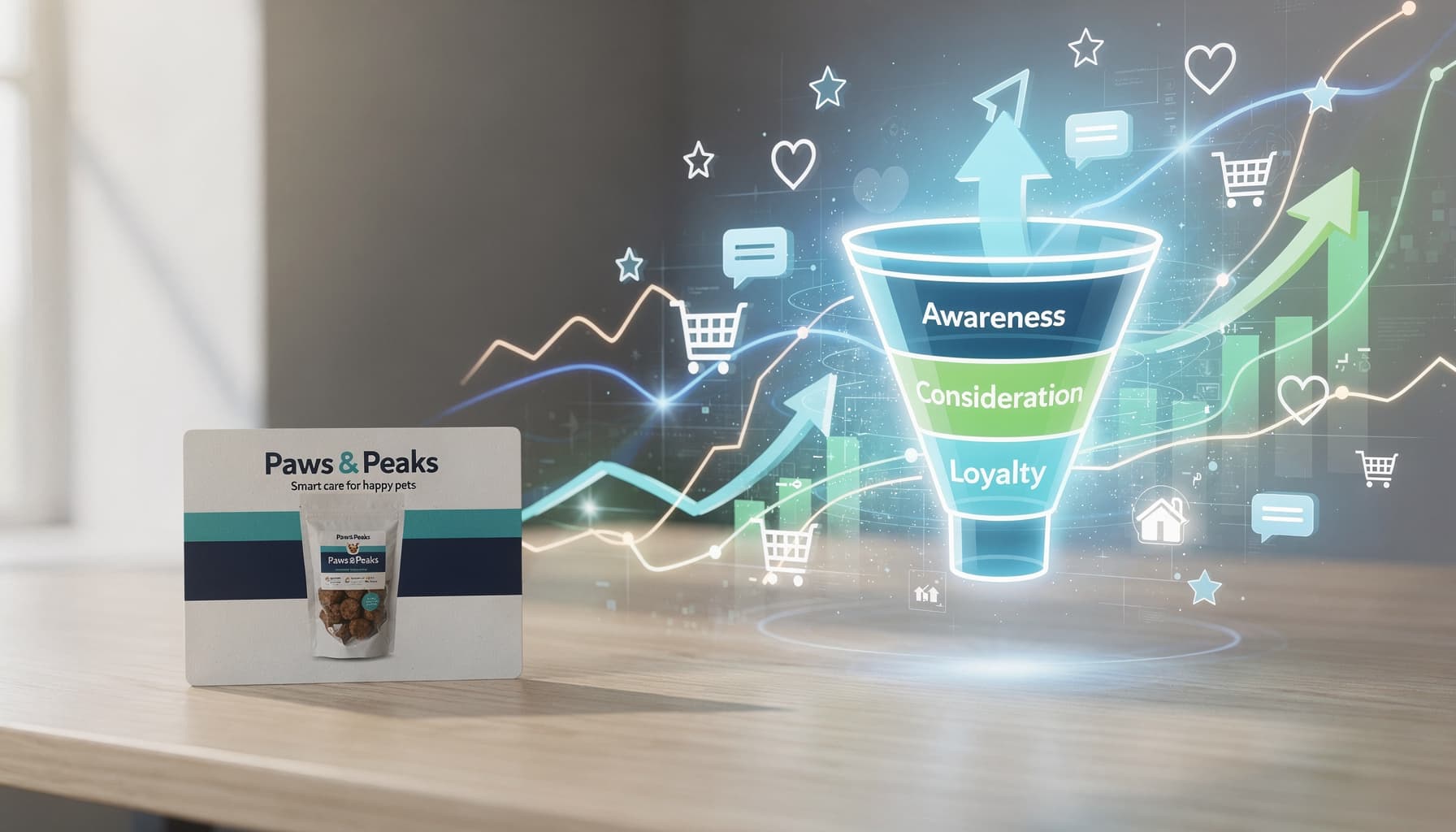
An ecommerce brand strategy isn't just a fancy campaign or a logo refresh. It's the integrated system through which your positioning, customer experience, and growth outcomes come together into one coherent plan. A small specialty pet products brand saw repeat purchases rise from 8% to 19%, simply by crafting a unified brand strategy without increasing ad spend. Small brands can use strategy as a growth catalyst, not just a finishing touch.
Positioning, messaging, channel mix, customer journey mapping, and feedback integration form the bedrock of an effective ecommerce brand strategy. These elements are interconnected, weak positioning leads to confused messaging. Brands that effectively collect and use customer data stand out from the competition. Your task is to identify the weakest pillar and strengthen it as your priority.
Most small brands fail to stand out because they don't adequately integrate their brand values and customer expectations. Real growth comes when every interaction with the consumer echoes the brand's core values clearly.
Expert Note: Many small brands forget to map customer feedback systematically across all touchpoints, which usually leads to blind spots in their retention metrics.
Key Takeaway: Conduct a quarterly review of all brand messaging and touchpoints, matching them against customer feedback themes for immediate improvements.
Building an ecommerce brand strategy that drives growth
Are you struggling to make your ecommerce brand stand out in a market where 80% of new D2C brands fail within 18 months?
Your brand values should do two things at once: repel the wrong customers and pull the right ones in. I worked with a health and wellness brand that rewrote its mission around a specific underserved need, and within 9 months, repeat purchase rate climbed 32% and AOV rose 18%. That kind of alignment builds loyalty no discount can buy.
Positioning is not just about what you sell, it is about the emotional and functional gap your competitors are leaving open. Brands that run real customer content in ads see click-through rates 14 to 27% above industry benchmarks, because buyers trust buyers more than they trust brand copy.
Your mission, voice, and visual identity are not branding exercises, they are the operating system behind every campaign, every email, and every product page. Get these right and consistency starts compounding into trust.
Expert Note: Using dynamically generated UGC (user-generated content) in performance ads outperforms static studio creatives in both ROAS and engagement for most small brands.
Key Takeaway: Gather at least 10 new customer testimonials each month and rotate them through your top ad channels for higher authenticity and conversion.
Channel Selection for Ecommerce Brand Strategy
Are you relying solely on platforms like Instagram, only to watch competitors flourish by exploring newer channels?
Combining owned, earned, and paid channels into one connected system is what separates brands that scale from brands that stall. Owned channels give you full control over the conversation. Earned channels carry trust that no paid ad can replicate. Keep your lists clean and your messaging honest, and you will see the difference in repeat purchase rates.
Less conventional channels like TikTok and WhatsApp can be goldmines for small brands that prioritize authenticity over budget. A natural skincare brand achieved a 41% repeat purchase increase through TikTok and WhatsApp sequenced flows combined with retargeting.
Being everywhere is not the goal. I have seen brands running five channels simultaneously with zero clarity on what is actually converting, and their ROAS was a mess. Synchronized data across platforms shows you exactly where customers are dropping off and what is driving real conversions. Server-side tracking is non-negotiable if you want numbers you can actually trust.
Expert Note: Integrating WhatsApp API for post-purchase follow-ups can capture up to 20% more repeat purchases compared to email-only flows in India.
Key Takeaway: Set up conversion tracking across all channels and review weekly to identify which source drives your highest-value customers.
Ready to stop doing this manually? Ready to scale beyond limits? Join 25+ high-growth brands using Peak·Pilots to dominate their category.. Book a free consultation and get your automation roadmap in 48 hours.